- Free to explore, with a car, bus, the Sóller train or on foot
- Deià, Valldemossa, Sóller and Fornalutx are the classic villages
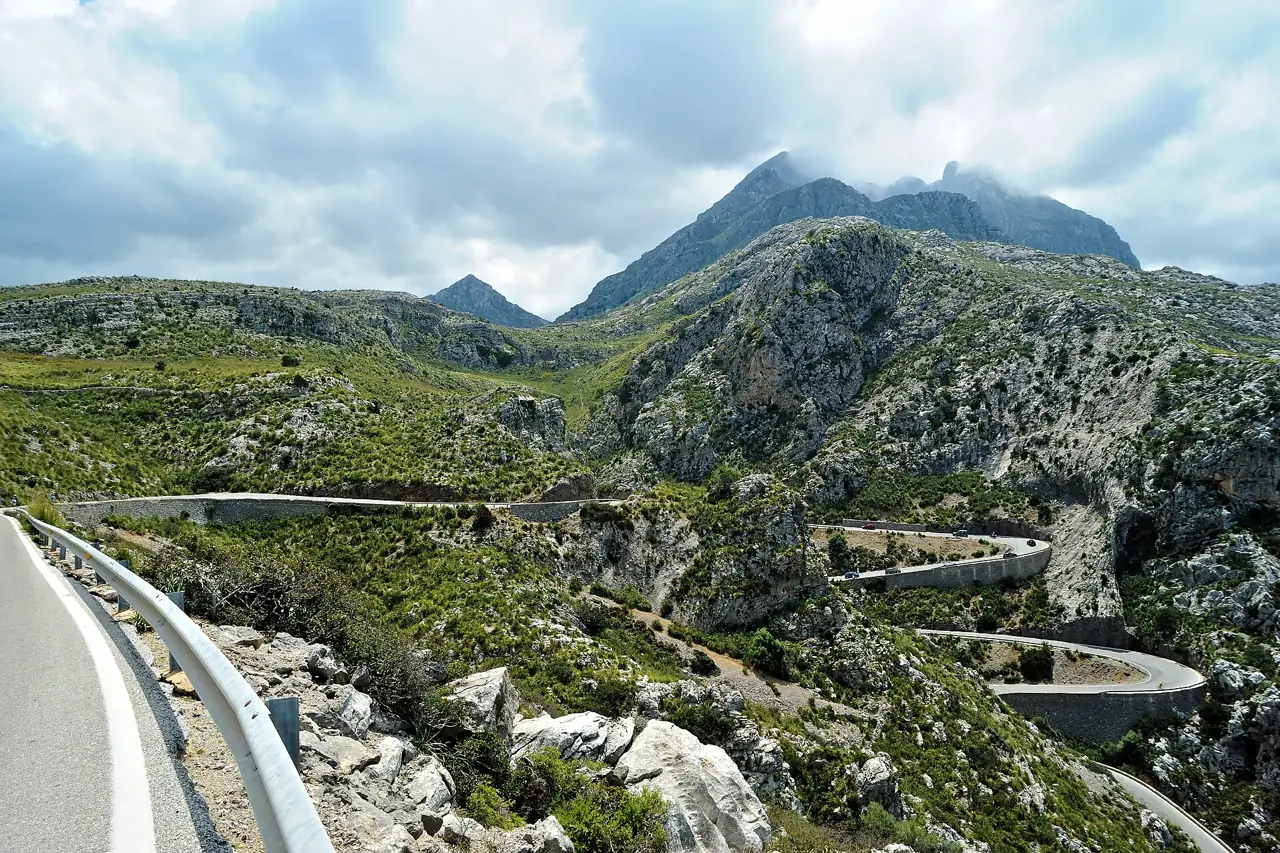
- The Sa Calobra road is spectacular but busy with coaches
- Spring and autumn are best for walking
- Type
- Nature
- Where
- Mallorca
- Time needed
- 1 day (or several days walking)
- Admission
- free
The Serra de Tramuntana runs for about 90km along the north-west coast of Mallorca, from Andratx to Cap de Formentor. It was declared a UNESCO World Heritage Site in 2011 for its cultural landscape: centuries of dry-stone terraces, mountain paths and water channels that let farmers grow olives and citrus on steep slopes. Its highest peak, Puig Major, reaches about 1,440m.
For anyone who thinks of Mallorca only as beaches, this is the other side of the island, and a short drive from Palma.
What you'll see
- Valldemossa, with its Carthusian monastery where Chopin and George Sand spent a winter.
- Deià, a honey-coloured village stacked on a hillside above the sea, long loved by artists and writers.
- Sóller and Port de Sóller, reached from Palma on the vintage wooden train, then by tram down to the bay.
- Fornalutx, a car-free tangle of stone lanes surrounded by orange groves.
- Sa Calobra and the Torrent de Pareis, where a dramatic road with a famous "tie knot" hairpin drops to a cove and a gorge.
- Cap de Formentor, the rocky peninsula and lighthouse at the far north-east tip.
Walking and cycling
The GR221 "Dry Stone Route" crosses the range over several days, with mountain refuges along the way. Shorter favourites include the Archduke's Path above Valldemossa and the walk from Sóller up the Barranc de Biniaraix. Road cyclists flock here in spring for climbs such as Puig Major and Sa Calobra.
Practical information
- Getting there: a hire car gives the most freedom, but roads are narrow and parking in villages is tight. TIB buses link Palma with Valldemossa, Deià and Sóller. The Ferrocarril de Sóller runs from Palma's Plaça d'Espanya.
- Best time to go: March to June and September to November for walking. July and August are hot and crowded; some roads, including Formentor, have seasonal restrictions on private cars.
- Costs: the mountains are free. Budget for the Sóller train, monastery entry and parking.
Drive Sa Calobra early in the morning, before the tour coaches. Some visitors take the boat from Port de Sóller one way instead.
For the rest of the island and the Balearics, see our Spain guide.
Where is Serra de Tramuntana?
Open in OpenStreetMap · 39.73083, 2.69472
Frequently asked questions
Can you visit the Serra de Tramuntana without a car?
Yes. The Sóller train, TIB buses and boat trips cover the main villages, and many hikes start from bus stops. A car just makes it easier to see several places in a day.
Is the Serra de Tramuntana good for beginner walkers?
Yes. There are plenty of short, well-marked routes between villages. Wear proper footwear, as paths are often rocky.
How long is the drive from Palma?
Valldemossa is about 30 minutes from Palma by car, and Sóller about 35 minutes through the road tunnel.
Written by
Thomas Ski, mountains & expeditions editor
Thomas is happiest above the tree line or below the Antarctic Circle. He writes our ski, mountain and polar expedition guides.
More from ThomasOpening times and ticket prices change often; check the official website shortly before you visit.