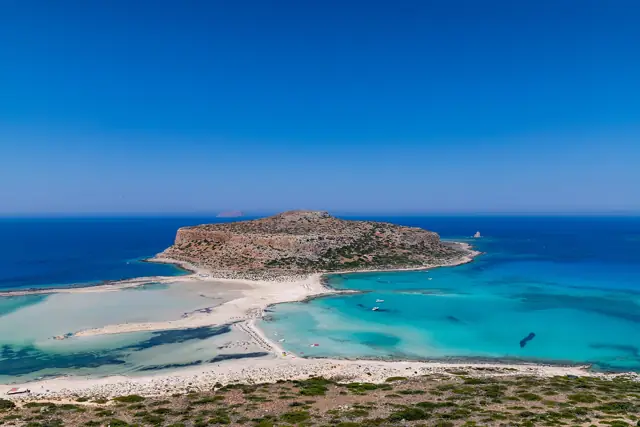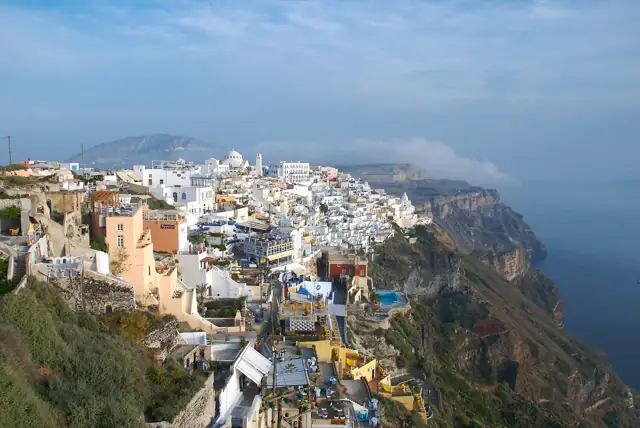
- Crete suits families and food lovers, Santorini couples and honeymooners
- June and September are the sweet spot for weather and value
- Flights take around 3h30-4h from the UK
- Island-hop by ferry, but book summer sailings in advance
- Airports
- Athens (ATH), Heraklion (HER), Chania (CHQ), Santorini (JTR), Rhodes (RHO), Corfu (CFU)
- Flight time
- about 3h45 from London to Athens
- Best time to go
- May-June and September-October
- Currency
- Euro (€)
Greece is the definition of a summer holiday for many British travellers: warm seas, grilled fish by the harbour and history on every corner. With more than 200 inhabited islands plus a mainland full of ancient sites, the hardest part is choosing where to go. The season is long, too, running roughly from May to October on most islands.
This guide helps you pick the right place, time your trip and get around without stress.
Where to go in Greece
Athens
Most visitors spend at least a night or two in the capital. Climb the Acropolis early in the morning to beat the heat and the crowds, then visit the Acropolis Museum and eat in the lanes of Plaka and Psyrri. Athens is also the main hub for ferries from Piraeus and Rafina.
Crete
Greece's largest island could fill several holidays. Crete has the Venetian harbour towns of Chania and Rethymno, superb beaches such as Elafonissi and Balos, the Samaria Gorge and the Minoan palace of Knossos near Heraklion. Food is a highlight, and it suits families as well as couples.
Santorini
Santorini is the famous caldera island, with cliff-top villages, volcanic beaches and spectacular sunsets from Oia. It's best for couples and short stays, and is very busy when cruise ships are in, so stay overnight to enjoy it in the early morning and evening.
Other islands and the mainland
The Ionian islands, including Corfu, Kefalonia and Zakynthos, are greener and good for families. Rhodes and Kos in the Dodecanese combine beaches with medieval towns. Naxos and Paros are excellent for a first Cyclades island-hop. On the mainland, the monasteries of Meteora, perched on rock towers, and the ancient sites of Delphi and the Peloponnese reward travellers who hire a car.
Best time to visit Greece
| Month | Weather and crowds |
|---|---|
| April-May | Warm days, wildflowers, sea still cool; great for sightseeing |
| June | Hot and sunny, sea warming up, prices rising |
| July-August | Very hot, strong meltemi winds in the Aegean, peak prices and crowds |
| September-October | Warm sea, softer light, lower prices; some services wind down late October |
| November-March | Quiet; many island hotels close, Athens and Crete stay open |
June and September give the best balance. If you're travelling with children in August, consider the Ionian islands, which are less windy than the Cyclades.
Heatwaves have become more common in recent summers, and the Acropolis can close in the early afternoon during extreme heat. Plan outdoor sights for the morning.
Getting to Greece from the UK
Flight times are around 3h45 to Athens and up to about 4h to Crete or Rhodes. In summer, direct charter and low-cost flights serve many islands, including Crete, Corfu, Rhodes, Kos, Zakynthos, Kefalonia and Santorini, from London and regional airports. In winter, routes shrink and you'll often connect through Athens.
British passport holders can visit visa-free for up to 90 days in any 180-day period. Your passport must have been issued less than 10 years ago and be valid for three months beyond departure. You'll register fingerprints and a photo under the EU's Entry/Exit System on your first visit.
Getting around
Ferries are part of the fun. Conventional ferries are cheaper and steadier, while high-speed catamarans are quicker but can be cancelled in strong winds. Book popular summer sailings, especially with a car, a few weeks ahead. Domestic flights from Athens save time on longer hops. On larger islands like Crete, a hire car is the easiest way to explore; elsewhere, buses and taxis cover most needs.
Money and costs
Greece uses the euro. Tavernas offer good value away from the most famous spots, and a meal of shared plates with house wine is usually cheaper than in the UK. Santorini and Mykonos are noticeably more expensive. Hotels add a per-night accommodation tax, higher in peak season, and cruise passengers pay a landing fee at Santorini and Mykonos. Carry some cash for small tavernas and beach sunbeds; tipping 5-10% is appreciated.
Top attractions in Greece
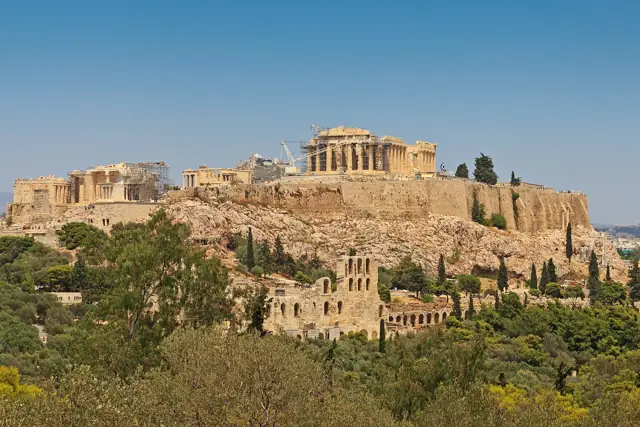 Landmark
Acropolis
The rocky citadel above Athens, crowned by the Parthenon, is the most important ancient monument in Greece.
 Landmark
Knossos
The great Minoan palace near Heraklion, linked to the legend of the Minotaur and partly rebuilt in vivid colour.
 Viewpoint
Oia
Santorini's cliff-top village of white houses and blue domes, famous for watching the sun sink into the caldera.
Greece on the map
Frequently asked questions
Which Greek island is best for a first visit?
Crete is the safest bet: it has beaches, history, great food and options for every budget. If you want a classic Cyclades experience, combine Naxos or Paros with a night or two in Santorini.
When is the sea warm enough for swimming in Greece?
From June to October the sea is comfortable for most people, peaking at around 24-26 °C in August and September.
Can I island-hop in Greece without a plan?
In spring and autumn, yes, as long as you check timetables. In July and August, book key ferries and accommodation in advance, as both sell out.
How many days do I need in Athens?
Two full days covers the Acropolis, the Acropolis Museum, the Ancient Agora and a couple of neighbourhoods. Add a day for a trip to Cape Sounion or Delphi.
Written by
Anna Beach, family & practical travel editor
Anna knows which beach has shade at 3pm and which car hire excess is a rip-off. She covers sun, islands, family trips and practical travel tips.
More from AnnaWe research every guide carefully, but prices, opening times and timetables change. Check them shortly before you travel. Links to our booking partners are affiliate links.