- Rügen is linked to the mainland by road and rail bridges at Stralsund
- The Königsstuhl chalk cliff in Jasmund National Park is the island's most famous sight
- Binz, Sellin and Göhren have classic white seaside villas
- A historic steam train, the Rasender Roland, runs between the resorts
- Airports
- Berlin Brandenburg (BER), Hamburg (HAM), Rostock-Laage (RLG)
- Best time to go
- June-September
- Type
- Island
Rügen is Germany's largest island, on the Baltic coast of Mecklenburg-Western Pomerania. It is famous for its white chalk cliffs, painted by Caspar David Friedrich, and for its long sandy beaches backed by seaside resorts with white villas and piers. Inland are beech forests, lagoons and quiet villages.
It is the highlight of Germany's Baltic coast and a classic German summer holiday spot that few UK visitors know. See our Mecklenburg-Western Pomerania guide and the Germany guide for more.
Things to do
- Jasmund National Park – beech forests and chalk cliffs, including the Königsstuhl and its new skywalk.
- Binz – the largest resort, with a long beach, pier and resort architecture.
- Sellin pier – a historic pier with a restaurant at its end.
- Cape Arkona – the island's northern tip with lighthouses and a Slavic temple site.
- Prora – a vast building complex built by the Nazis as a holiday resort, now with a documentation centre.
- Rasender Roland – a narrow-gauge steam railway linking Putbus, Binz, Sellin and Göhren.
- Hiddensee – a car-free island just off the west coast, reachable by ferry.
- Putbus – a white classical town with a circular square.
Where to stay
| Area | Why stay there |
|---|---|
| Binz | Largest resort, long beach and many restaurants |
| Sellin | Smaller resort with a famous pier |
| Göhren | Quieter beaches and walks |
| Sassnitz | Close to the national park and chalk cliffs |
Getting there
Fly to Berlin or Hamburg, then take a train to Stralsund and on to the island; allow roughly three to four hours from Berlin. Rostock-Laage airport is closer but has few UK flights. Driving from Berlin takes around three and a half to four hours, crossing the Rügen Bridge at Stralsund.
Best time to visit
June to September brings beach weather, but July and August are busy with German holidaymakers. May and September are quieter and good for walking. Winter is cold and many places close.
Walk the clifftop path from Sassnitz to the Königsstuhl for views of the chalk cliffs.
Top attractions in Rügen
 Landmark
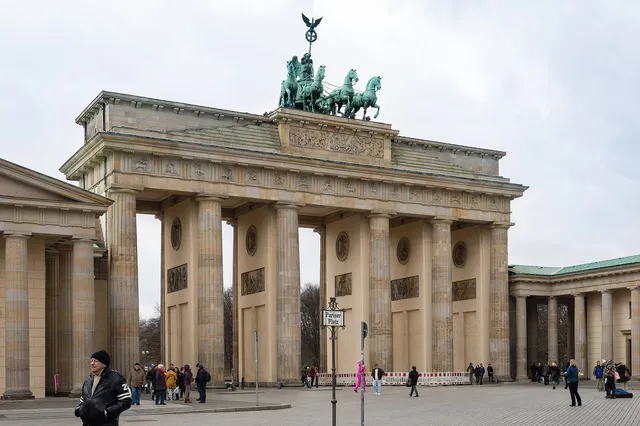
Brandenburg Gate
Berlin's neoclassical city gate, crowned by the Quadriga, once trapped behind the Wall and now the symbol of a reunited…
 Landmark
East Side Gallery
The longest surviving stretch of the Berlin Wall, painted in 1990 by artists from around the world and now an open-air…
 Landmark
Neuschwanstein Castle
King Ludwig II's fairy-tale castle on a crag in the Bavarian Alps, the inspiration for Disney's Sleeping Beauty Castle.
Rügen on the map
Frequently asked questions
How do I get to Rügen?
By train or car from Stralsund across the bridge, or by ferry from smaller ports.
Is Rügen good for a beach holiday?
Yes. It has long sandy beaches, clean water and classic seaside resorts, though the Baltic is cool.
How long should I stay on Rügen?
Three to five days lets you see the cliffs, resorts and Cape Arkona.
Can I visit Hiddensee from Rügen?
Yes. Ferries run from Schaprode on Rügen's west coast.
Written by
Emma City breaks & deals editor
Emma plans city breaks the way other people plan the weekly shop: on a budget, with a spreadsheet and a backup plan. She covers city guides and deal-hunting.
More from EmmaWe research every guide carefully, but prices, opening times and timetables change. Check them shortly before you travel. Links to our booking partners are affiliate links.