- The FCDO advises against all travel to Niger, so check gov.uk before any plans
- Insurance is usually invalid against FCDO advice
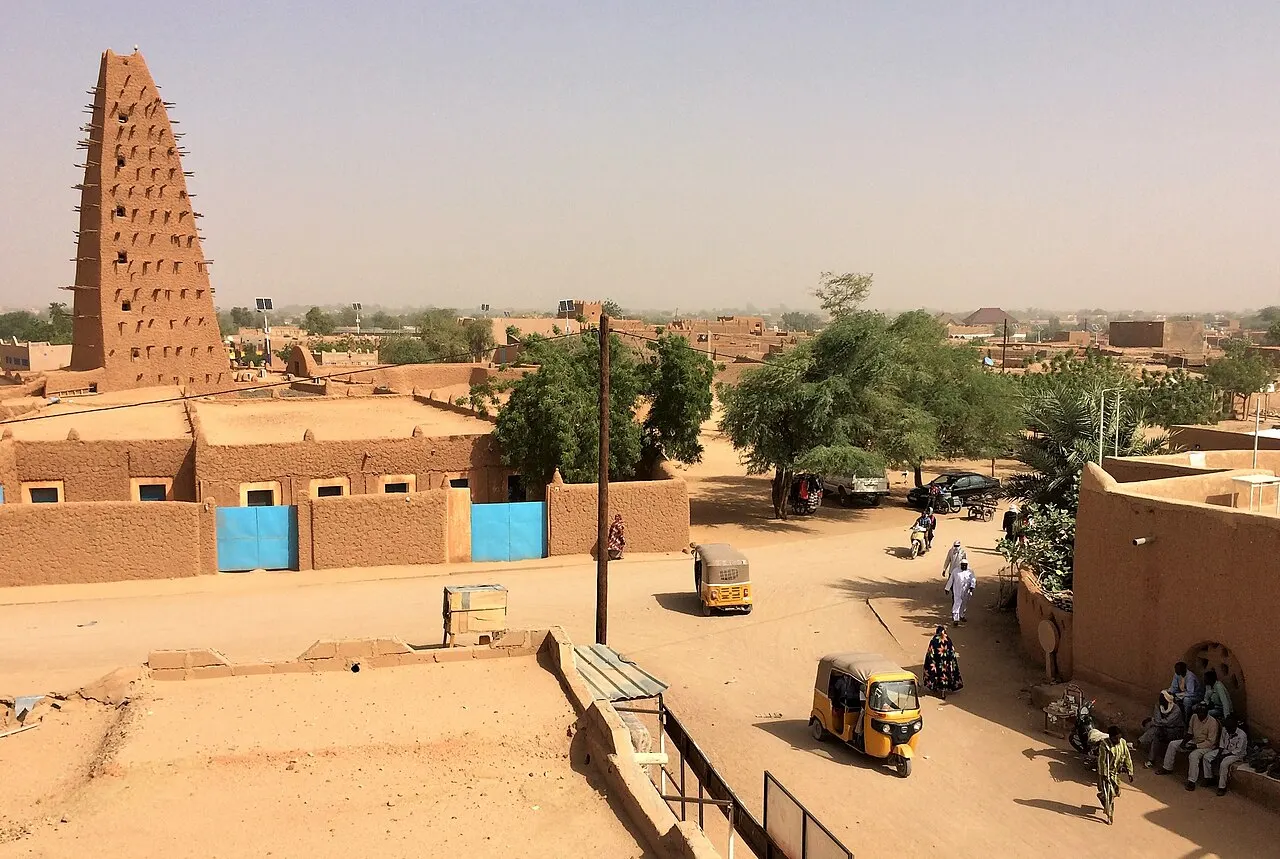
- The historic centre of Agadez and the Aïr and Ténéré reserves are UNESCO World Heritage Sites
- Niger is home to the last West African giraffes
- Airports
- Niamey Diori Hamani (NIM)
- Flight time
- about 8-11h from London to Niamey, with one stop
- Best time to go
- November-February, when it is dry and cooler
- Currency
- West African CFA franc (XOF)
Niger is one of Africa's largest countries, and around four-fifths of it is desert. The Niger River curves through its south-west, where most people live, while the north holds the volcanic Aïr Mountains and the Ténéré, one of the most beautiful sand seas in the Sahara. For centuries trans-Saharan caravans passed through Agadez, whose earthen mosque minaret still towers over the old city, and Tuareg, Hausa, Zarma, Fulani and Wodaabe cultures give the country remarkable diversity.
Niger has been affected by attacks by armed groups for many years, and in July 2023 a military coup removed the elected president. At the time of writing the UK FCDO advises against all travel to Niger because of the threat of terrorism and kidnapping and the unstable political situation. Travel insurance is usually invalid against FCDO advice. Check the latest gov.uk FCDO travel advice for Niger before making any plans. This guide covers the country's culture and landscapes for when it is safe to visit. For the wider region, see our Africa guide, or neighbouring Algeria, Benin and Nigeria.
Why go
- Agadez: the "gateway to the Sahara" has a UNESCO-listed historic centre of mud-brick houses and the Grand Mosque, whose minaret of around 27m is the tallest mud-brick structure of its kind.
- Aïr and Ténéré: one of the largest protected areas in Africa, with black volcanic mountains, golden dunes, oasis villages and prehistoric engravings such as the life-size Dabous giraffes.
- Niamey: the riverside capital, with the Grand Marché, the National Museum and evening views over the Niger River.
- Kouré giraffes: east of Niamey, a community area where the last wild West African giraffes roam among villages and fields.
- W National Park: part of a UNESCO-listed transboundary park with Benin and Burkina Faso, known for elephants and big cats, now in a high-risk area.
- Wodaabe Gerewol: an extraordinary gathering in which young Wodaabe men wear elaborate make-up and dance to be chosen by women. It has often coincided with the Cure Salée festival near In-Gall at the end of the rainy season.
- Zinder: the old capital of the Damagaram sultanate, with a sultan's palace and a traditional Hausa quarter.
Where to stay
- Niamey: international and mid-range hotels near the river and in the Plateau district.
- Agadez: small hotels and auberges in traditional mud-brick buildings, some with rooftop terraces overlooking the mosque.
- The Aïr and Ténéré: camping on expedition with Tuareg guides, vehicles and cooks provided by the operator.
Getting there
There are no direct flights from the UK. Niamey has been reached via Istanbul (Turkish Airlines), Casablanca (Royal Air Maroc), Addis Ababa (Ethiopian Airlines) and West African hubs, with total journey times of roughly 8-11 hours. Air France suspended its Niamey flights in 2023. British travellers need a visa, and a yellow fever vaccination certificate is required. Malaria is present in the south, so check TravelHealthPro.
Niger is on the same time as the UK in winter and one hour behind in summer. Outside Niamey, roads are long and often rough, and desert travel has always required a licensed agency, Tuareg guides and well-equipped vehicles.
Best time to visit
The best time is November to February, when days are warm and desert nights can be cold. March to June is extremely hot, with temperatures often above 40°C. The short rainy season runs roughly from June to September in the south, and the festivals in the north have traditionally taken place towards the end of it, around September.
Tuareg tea is served in three glasses, said to be bitter like life, mild like love and sweet like death; accepting all three is part of the welcome.
Frequently asked questions
Is it safe to travel to Niger?
At the time of writing, the FCDO advises against all travel to Niger because of terrorism, kidnapping and political instability. Check gov.uk for the latest advice, and remember insurance is usually invalid if you travel against it.
What is the Ténéré?
The Ténéré is a vast area of the Sahara in north-eastern Niger, famous for its towering dunes and for the Tree of Ténéré, once the most isolated tree on Earth, which is now remembered by a metal sculpture.
What languages are spoken in Niger?
Hausa is the most widely spoken language, followed by Zarma-Songhai, with Tamasheq, Fulfulde and Kanuri among others. French has been widely used in administration and education.
Where can you see West African giraffes?
The last wild population of West African giraffes lives in Niger, mainly around Kouré, east of Niamey, along with populations moved to other reserves as part of conservation efforts.
Written by
Emma City breaks & deals editor
Emma plans city breaks the way other people plan the weekly shop: on a budget, with a spreadsheet and a backup plan. She covers city guides and deal-hunting.
More from EmmaWe research every guide carefully, but prices, opening times and timetables change. Check them shortly before you travel. Links to our booking partners are affiliate links.