- The FCDO advises against all travel to Libya, and insurance is usually invalid as a result
- The UK has very limited ability to help British nationals in Libya
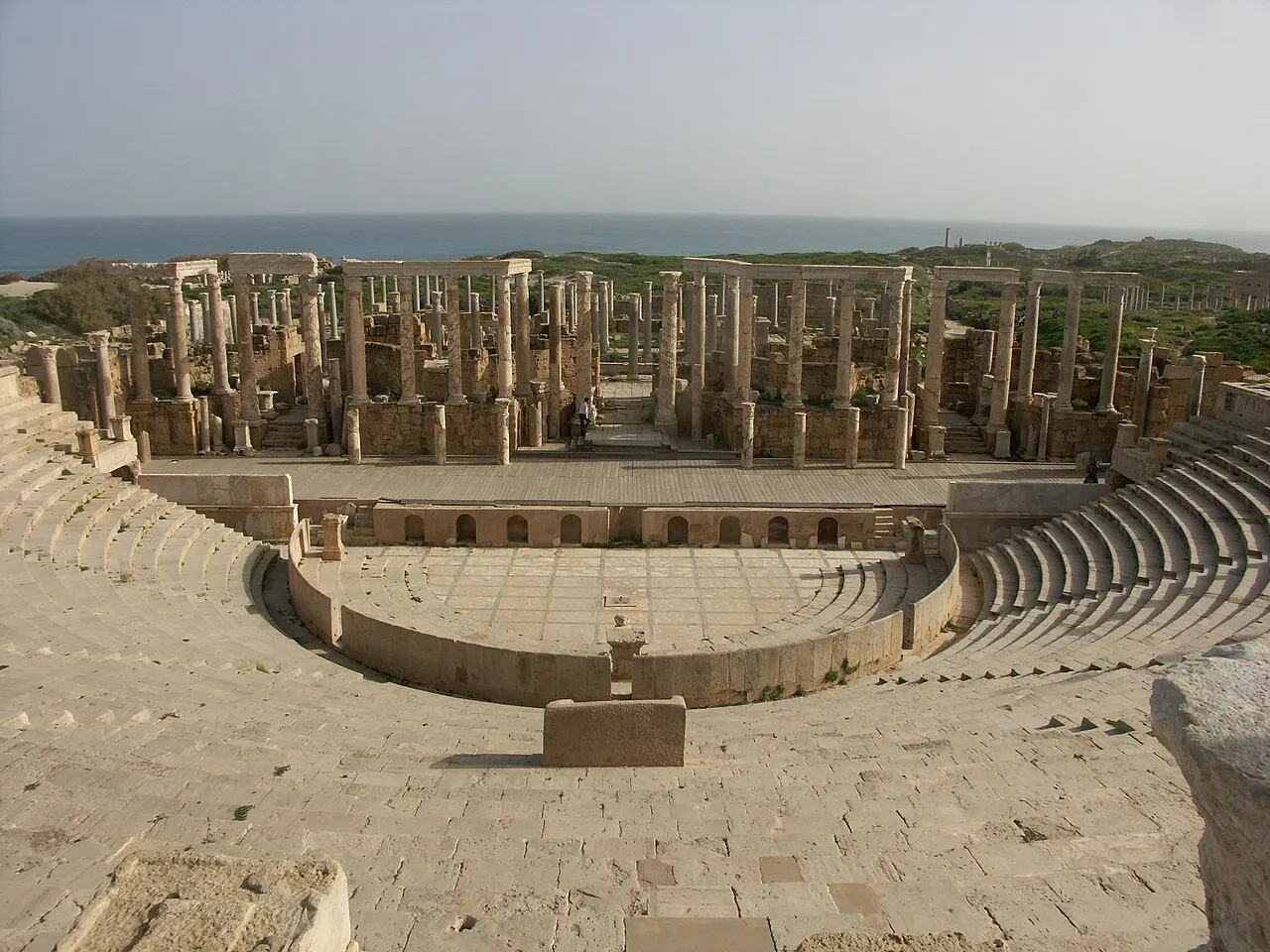
- Leptis Magna, Sabratha and Cyrene are among the best-preserved Roman and Greek sites in the world
- When it is safe, the cooler months from October to April are best
- Airports
- Tripoli Mitiga (MJI), Benghazi Benina (BEN)
- Flight time
- about 6-8h from London to Tripoli, with one stop
- Best time to go
- October-April, avoiding the summer heat
- Currency
- Libyan dinar (LYD)
Libya has some of the most spectacular ancient sites in the Mediterranean world. Along its coast, the Roman cities of Leptis Magna and Sabratha and the Greek city of Cyrene are so complete that they rival anything in Italy or Greece, while inland the Sahara holds the old caravan town of Ghadames, sand seas and mountains covered in prehistoric rock art. Before 2011, a trickle of tourists came on organised tours; since then, conflict and political division have kept almost all visitors away.
We need to be clear: at the time of writing the UK FCDO advises against all travel to Libya because of the unstable security situation, the risk of terrorism, kidnapping and armed clashes, and the British Embassy's limited ability to provide consular help. Travel insurance is usually invalid against FCDO advice. Libya has issued some tourist visas to small organised groups in recent years, but that does not change the UK government's position. Check the latest gov.uk FCDO travel advice for Libya before considering any trip. This guide covers Libya's heritage for when it is safe to visit. For the wider region, see our Africa guide, or neighbouring Tunisia, Egypt and Algeria.
Why go
- Leptis Magna: the birthplace of the Roman emperor Septimius Severus, with an arch, basilica, theatre, market and harbour, all on the sea east of Tripoli. It is a UNESCO World Heritage Site.
- Sabratha: a Phoenician and Roman city west of Tripoli, best known for its three-storey theatre facing the Mediterranean.
- Cyrene: in the green hills of the Jebel Akhdar in the east, a major Greek city founded in the 7th century BC, with temples, a sanctuary of Apollo and a huge necropolis.
- Ghadames: the "pearl of the desert", an old town of whitewashed mud houses linked by covered alleys and rooftop walkways designed for the women of the town. It is also UNESCO-listed.
- Tadrart Acacus: mountains in the south-west near the Algerian border, with rock paintings and engravings thousands of years old.
- Ubari sand sea: palm-fringed lakes among towering dunes, such as Gaberoun and Umm al-Maa.
- Tripoli: the old medina, the Red Castle (Assaraya al-Hamra) museum and the Arch of Marcus Aurelius.
Where to stay
- Tripoli: a handful of large hotels along the seafront and near the old city, mostly used by business travellers.
- Benghazi: the main city in the east, with a small selection of hotels.
- Ghadames and the desert: traditional guesthouses and desert camps, organised through a licensed local agency.
Getting there
There are no direct flights from the UK. Libyan airlines and some foreign carriers connect Tripoli and Benghazi with cities such as Istanbul, Tunis and Amman, giving total journey times of roughly 6-8 hours from London. The EU has restricted Libyan airlines from flying into its airspace for safety reasons. British travellers need a visa and, in practice, a sponsor or licensed agency. Airport closures can happen at short notice during clashes.
Libya is one hour ahead of the UK in winter and on the same time in summer. Distances between the sites are large: Leptis Magna is around two hours east of Tripoli, while Cyrene is in the far east and Ghadames is a long drive or short flight to the south-west.
Best time to visit
The best months are October to April, when the coast is mild and the desert days are warm with cool nights. Summer, from June to September, is very hot on the coast and dangerous in the Sahara. The ghibli, a hot, dusty desert wind, can blow in spring.
Arabic is the main language and English is not widely spoken, so a local guide is essential both for getting around and for understanding the archaeological sites.
Frequently asked questions
Can British tourists visit Libya?
The FCDO currently advises against all travel to Libya. Some tourist visas have been issued to organised groups, but travelling against FCDO advice usually invalidates insurance, and consular support is very limited. Check gov.uk before considering any trip.
What are the most famous sites in Libya?
Leptis Magna, Sabratha, Cyrene, the old town of Ghadames and the rock art of the Tadrart Acacus are all UNESCO World Heritage Sites and the country's best-known attractions.
Is Libya on the Mediterranean?
Yes. Libya has a coastline of almost 1,800km on the Mediterranean, the longest of any African country, and most of the population lives along it.
What currency is used in Libya?
The Libyan dinar. Libya is largely a cash economy, and foreign cards are rarely accepted.
Written by
Thomas Ski, mountains & expeditions editor
Thomas is happiest above the tree line or below the Antarctic Circle. He writes our ski, mountain and polar expedition guides.
More from ThomasWe research every guide carefully, but prices, opening times and timetables change. Check them shortly before you travel. Links to our booking partners are affiliate links.