- Réunion is a French overseas department, so it uses the euro and feels like France in the tropics
- The UNESCO-listed peaks, cirques and ramparts make it one of the world's great hiking islands
- Hire a car, as public transport is limited and the scenery is in the mountains
- Swim only in the lagoons and supervised areas because of the shark risk
- Airports
- Saint-Denis Roland Garros (RUN), Saint-Pierre Pierrefonds (ZSE); car hire essential
- Flight time
- about 13-15h from London, usually via Paris (around 11h from Paris)
- Best time to go
- May-November, the cooler dry season; September-November is ideal for hiking
- Currency
- Euro (EUR)
Réunion is a volcanic island in the Indian Ocean, about 200km south-west of Mauritius and east of Madagascar. It is a French overseas department and region, which means it is fully part of France and the EU, with the euro, French supermarkets, good roads and French bakeries alongside a Creole culture shaped by African, Malagasy, Indian, Chinese and French roots. More than 40% of the island is protected as a national park, and its Pitons, cirques and remparts are a UNESCO World Heritage Site.
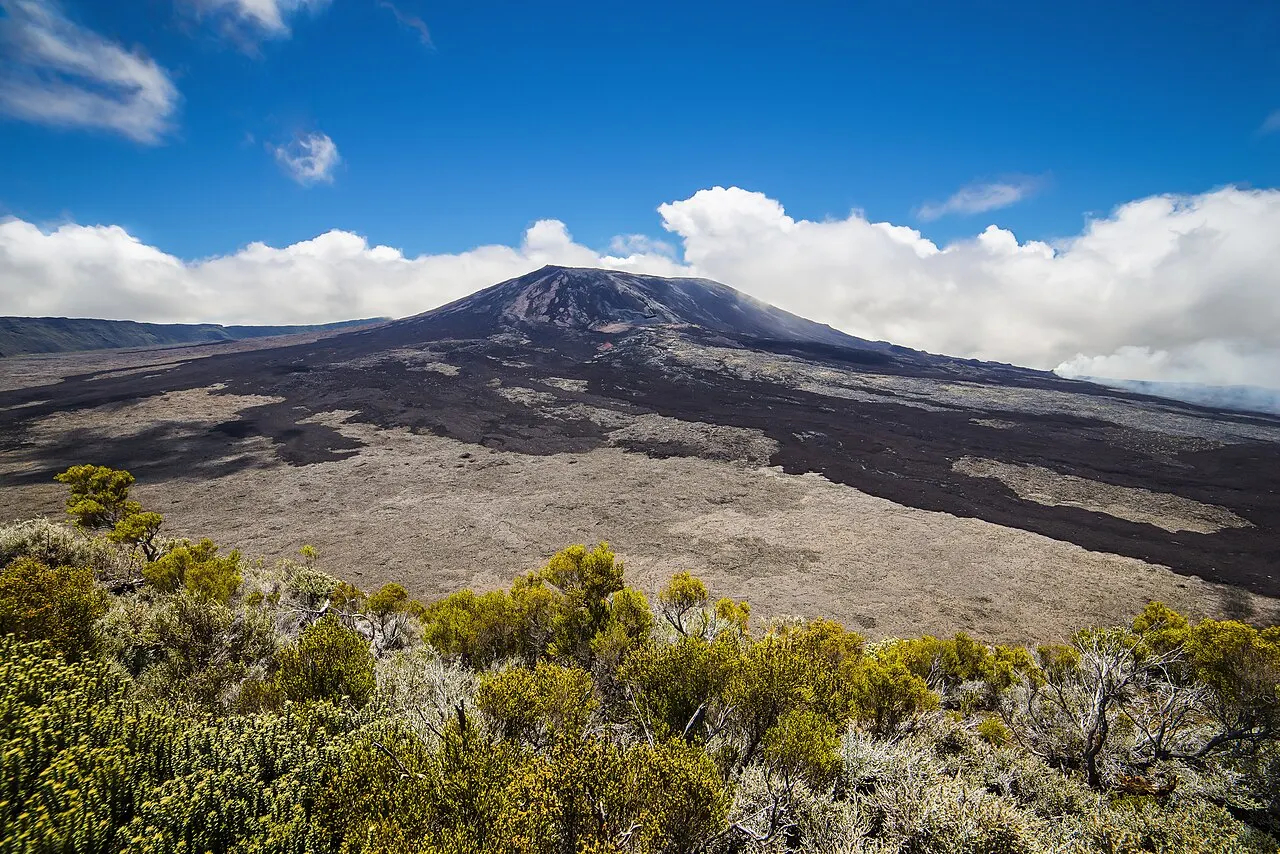
What makes Réunion special is its landscape. Piton de la Fournaise is one of the world's most active volcanoes, Piton des Neiges rises to just over 3,000m, and three vast collapsed calderas, the cirques of Cilaos, Salazie and Mafate, hold villages, waterfalls and hiking trails. It is less about lazy beach days than neighbouring Mauritius or the Seychelles, and more about hiking, canyoning, paragliding and food. Unlike much of the region, the FCDO has no warnings against travel here, though it is still worth checking gov.uk. For the wider region, see our Africa guide and our France guide.
Things to do
- Hike Piton de la Fournaise: walk across the lunar landscape of the Plaine des Sables to the rim of the Dolomieu crater. Access closes during eruptions, so check before you go.
- Explore the cirques: Cilaos for hot springs and lentils, Salazie for waterfalls and the Creole village of Hell-Bourg, and car-free Mafate, reached only on foot or by helicopter.
- Climb Piton des Neiges: a classic two-day hike, staying overnight in a mountain refuge and summiting for sunrise above the clouds.
- Viewpoints: Le Maïdo at dawn for the drop into Mafate, and the Piton de l'Eau and Trou de Fer viewpoints.
- The west coast lagoon: snorkel in the protected lagoons of L'Hermitage, La Saline and Saint-Leu.
- Whale watching: humpback whales visit roughly from June to October.
- Paragliding: Saint-Leu is one of the world's best paragliding spots, with tandem flights over the lagoon.
- Creole food: try cari (curry), rougail saucisse, samoussas and bouchons, and visit a vanilla plantation in the east.
- The Grand Raid: every October the Diagonale des Fous ultra-trail crosses the island, a huge local event.
Where to stay
- Saint-Gilles-les-Bains and L'Hermitage: the main beach resort area on the west coast, with lagoons, restaurants and most hotels.
- Saint-Leu: a quieter west coast town for paragliding, surfing and the lagoon.
- Saint-Pierre: a lively southern town with a beach, a big Saturday market and easy access to the volcano.
- Cilaos and Hell-Bourg: mountain villages in the cirques, with guesthouses and small hotels for hikers.
- Mafate gîtes: simple mountain lodges in the car-free cirque, booked in advance.
Getting there
There are no direct flights from the UK. The most common route is London to Paris, then a long-haul flight of around 11 hours to Réunion with Air France, Air Austral, Corsair or French bee. Another option is to fly from London to Mauritius and connect with a short hop of about 45 minutes to Réunion. Réunion is four hours ahead of the UK in winter and three in summer, so there is little jet lag. Entry rules for French overseas departments differ slightly from mainland France, so check gov.uk before travel. Your GHIC can generally be used for state healthcare, but travel insurance is still essential.
Best time to visit
The cooler, drier season from May to November is the best time to visit, especially for hiking, with September to November particularly good. December to April is hot and humid, with heavy rain on the east coast and a risk of cyclones from around January to March, which can close trails. Peak periods are the French school holidays, especially July, August and Christmas.
Start mountain hikes and viewpoints at dawn, as clouds often roll into the cirques and over the summits by late morning.
Frequently asked questions
Is Réunion part of France?
Yes. Réunion is a French overseas department and region, fully part of France and the EU. It uses the euro and French is the official language, with Réunion Creole widely spoken.
Is it safe to swim in Réunion?
Swimming is restricted outside the protected lagoons and supervised areas because of a history of shark attacks. Stick to the west coast lagoons and follow local signs and lifeguards.
How many days do you need in Réunion?
Allow at least 10 days, ideally two weeks, to see the volcano, at least one or two cirques and the west coast without rushing.
Do I need a visa for Réunion as a British citizen?
British citizens do not need a visa for a short holiday. Because Réunion is outside the Schengen area, check the latest entry rules on gov.uk before you travel.
Written by
Thomas Ski, mountains & expeditions editor
Thomas is happiest above the tree line or below the Antarctic Circle. He writes our ski, mountain and polar expedition guides.
More from ThomasWe research every guide carefully, but prices, opening times and timetables change. Check them shortly before you travel. Links to our booking partners are affiliate links.